GK Energy Knowledge Centre | Prepared 8 October 2026 | 4 min read
India’s solar transition is visible on rooftops and in fields as well as in large power parks. Decentralised solar places generation closer to the people who use electricity. That makes it an important part of the conversation about household budgets, irrigation, local employment and access to dependable energy.
The scale is already significant. A government backgrounder published in August 2026 reported that distributed solar contributed 16.3 GW of India’s solar capacity additions in FY 2025-26: 7.6 GW through PM-KUSUM and 8.7 GW from rooftop solar. These are additions during that financial year, rather than a measure of all decentralised solar installed to date. [1]
Why generation close to the customer matters
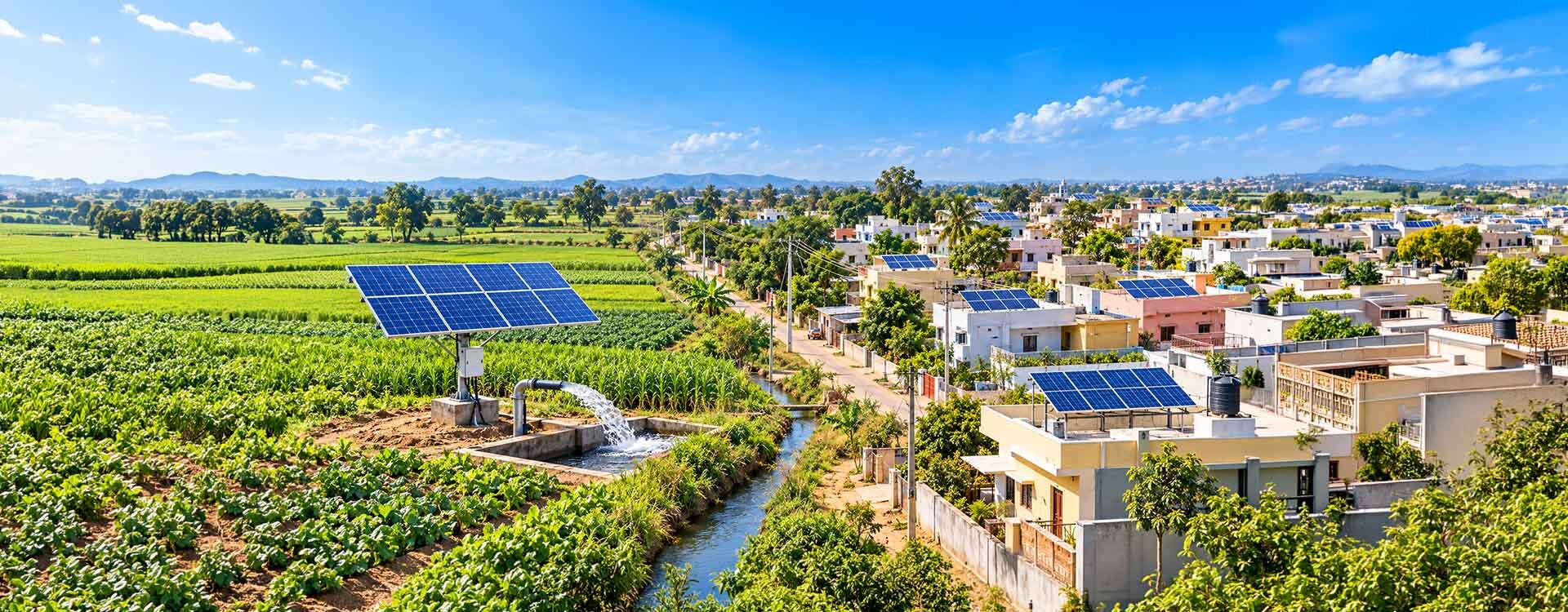
A rooftop can become a productive energy asset without a separate ground-mounted site. A solar pumping system can generate electricity for irrigation where the water is needed. These applications have different technical and financial requirements, but both bring the benefits of solar into everyday decisions.
That proximity also changes how a project should be evaluated. A homeowner wants a clear explanation of the electricity bill. A farmer wants a pump that matches the water source and irrigation need. The customer’s experience should shape the design, the installation process and the service offered after completion.
PM-KUSUM and PM Surya Ghar address distinct uses of solar energy. Agricultural solar includes standalone pumping and grid-connected approaches. Residential rooftop solar has its own application, equipment and distribution-company requirements. A strong decentralised energy sector needs execution capability across these different settings. [2, 3]
Farms and homes need different solutions
The distinction is useful when discussing benefits. Lower diesel dependence may be relevant to a farm replacing diesel pumping. Electricity-bill savings may be relevant to a grid-connected household. Neither should be treated as a universal outcome. A useful proposal explains the benefit that follows from the customer’s actual starting point.
Quality makes growth durable
Rapid installation can create an impressive headline. Long-term value comes from systems that keep performing. A practical quality plan covers site assessment, equipment traceability, sound installation, commissioning records and a service contact the customer can reach.
Consider the handover. If a customer does not know how to read the monitoring display, identify a fault or request maintenance, part of the system’s value remains out of reach. Simple instructions in a familiar language and a clear ownership record can make the installation much easier to use.
For local partners, standard checklists and repeatable training are useful ways to support consistency as volumes increase. The goal is to make a good installation reproducible across many sites, while leaving room for the engineering decisions each site requires.
Keep the process understandable
Customers also need clarity about approvals, payments and any applicable scheme support. A written sequence of steps helps them distinguish the equipment purchase from the subsidy process, grid connection and final commissioning. It should identify who is responsible at each stage.
Transparent timelines help the wider industry too. When developers and implementing agencies know what documents are required and how completion will be confirmed, they can plan people, inventory and service capacity more effectively. Policy ambition becomes easier to translate into functioning systems.
Measure outcomes alongside megawatts
The next stage of decentralised solar should be assessed through customer outcomes. Useful measures include generation, system availability, complaint resolution and the difference between expected and actual performance. These measures give installers an opportunity to improve and customers a stronger basis for trust.
GK Energy’s website describes work across agricultural pumps, rooftops and other renewable energy applications. [4] Our perspective is that the transition earns its credibility through the systems people use every day. Every completed site should have a clear purpose, a well-executed design and a practical plan for support.
Decentralised solar can make the energy transition more tangible across India. Sustaining it will require the same attention to the last installation as to the next capacity milestone. Explore GK Energy’s solutions for farms, homes and businesses to identify the right starting point.