
GK Energy Knowledge Centre | Prepared 8 October 2026 | 4 min read
For a farmer, dependable electricity is part of the irrigation plan. When supply arrives at inconvenient hours, the cost is measured in disrupted work, uncertain watering schedules and time spent waiting. Feeder-level solarisation offers a practical way to bring solar generation closer to agricultural demand and make daytime power a more useful part of rural life.
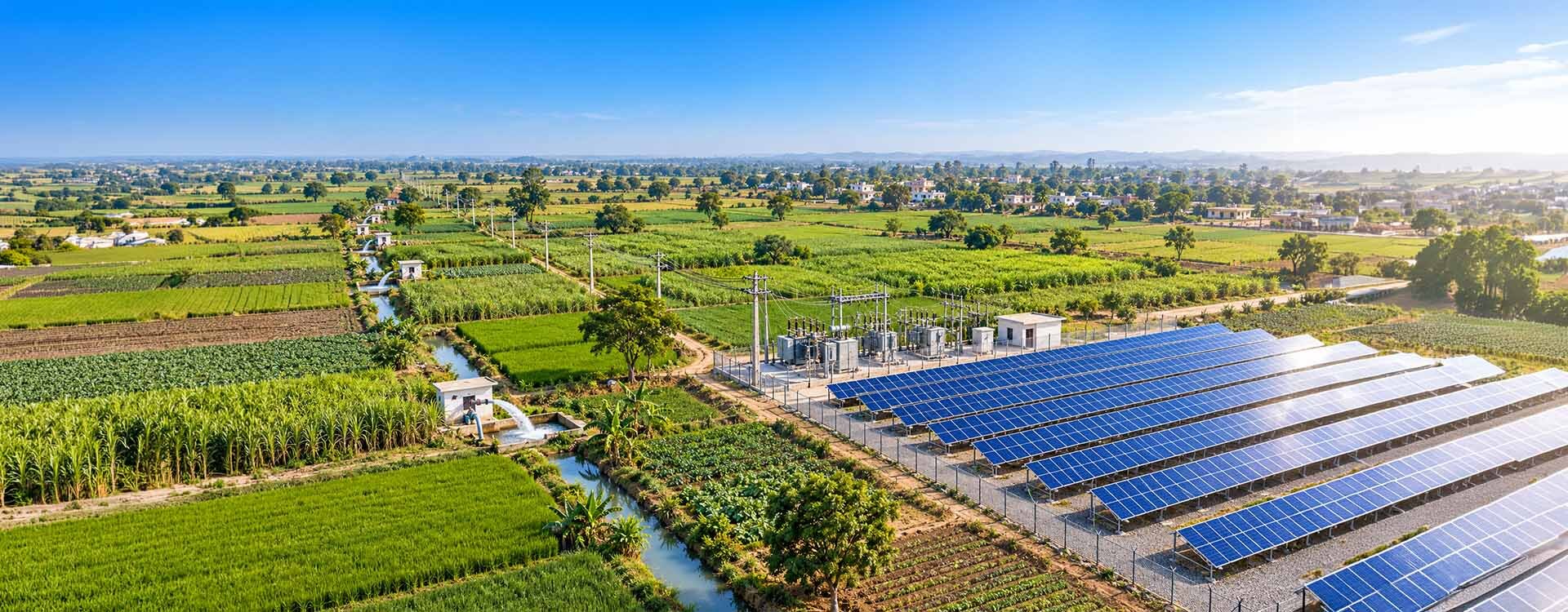
The opportunity begins with an existing network: agricultural feeders, substations and connected pumps. By planning solar projects around this infrastructure, states can address the energy needs of multiple farms together. The investment question is therefore about how effectively a project improves electricity service across the area it serves.
How feeder-level solarisation works
An agricultural feeder is a distribution line serving farm loads. Solarising it generally means connecting a suitably sized solar plant to the local distribution system so its generation can support those loads. This approach differs from installing a standalone solar pumping system on each farm. MNRE’s PM-KUSUM framework provides for feeder-level solarisation under Component C. [1]
The existing grid still matters. Solar output varies, and the network must manage the relationship between generation and demand. Land, interconnection capacity and equipment condition need assessment before construction. Reusing infrastructure can be valuable, but a project may still require new lines, protection equipment or substation upgrades.
Start with the irrigation schedule
Good design starts with a practical question: when do farmers need to pump water? A project should be evaluated against seasonal agricultural demand, the local solar resource and the supply arrangements the distribution company can actually deliver. Installed capacity alone cannot show whether a farmer receives useful power during a critical irrigation window.
It is equally important to explain the operating schedule to users. A clear daytime timetable helps farmers organise labour and watering. A clear fault-reporting process helps them respond when the service falls short. These details should be part of the project from the beginning, rather than added after commissioning.
Make every investment earn its place
Feeder solarisation should use a disciplined capital plan. The first stage is to identify what the network can already support. The next is to fund the improvements that remove real constraints. A transformer upgrade, better metering or an access road may contribute more to dependable service than expanding the solar plant without addressing its connection.
Our view at GK Energy is that project quality should be judged at the point of use. Developers, utilities and implementing agencies should agree on responsibilities for connection, testing, maintenance and performance reporting. A well-defined handover gives the project a stronger start and makes future problems easier to resolve.
Agrivoltaics adds another design challenge
Agrivoltaics combines crop cultivation and solar generation on the same land. In March 2026, the government said it was preparing PM-KUSUM 2.0 with a proposed dedicated 10 GW agri-PV component. This announcement describes a policy direction; project eligibility and support depend on the rules formally issued for implementation. [2]
Co-location also needs evidence from the field. Panel height, spacing, access for machinery and crop selection must suit the farm. The right question is whether the combined design works for the farmer’s agricultural activity as well as the energy project. Local trials and clear land agreements can help answer it.
Build a service that lasts
Feeder-level solarisation can connect agricultural development with better electricity planning. Its success should be tracked through useful supply hours, fault response and sustained performance, alongside construction milestones. Predictable contracts and coordinated approvals give everyone a clearer basis for delivery.
For farmers, the desired result is straightforward: power they can plan around. For utilities and developers, delivering that result requires careful engineering and continued accountability. When those priorities guide investment, feeder solarisation becomes a practical foundation for stronger rural energy services.
Explore GK Energy’s agricultural solar solutions to discuss the needs of your project.