Rooftop Solar with Battery Storage: Making Solar Work After Sunset
GK Energy Knowledge Centre | Prepared 8 October 2026 | 4 min read
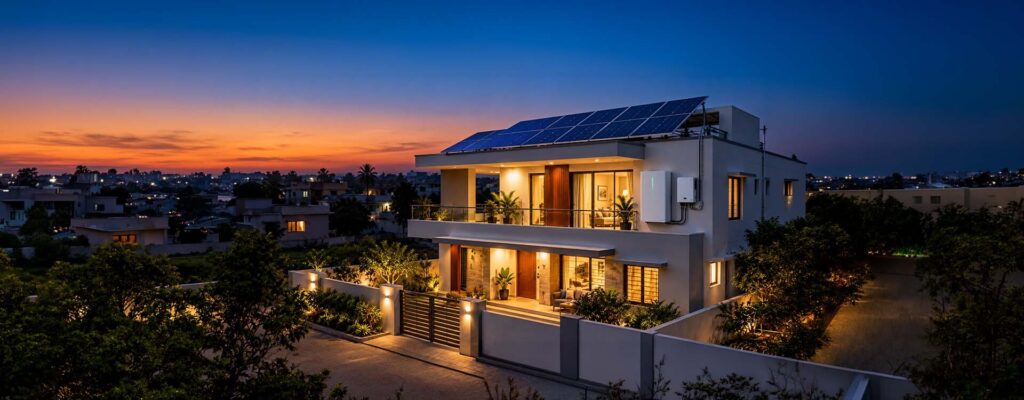
A rooftop solar system generates electricity while sunlight is available. A household’s demand often continues into the evening, when lights, appliances and other essential loads are in use. Battery storage can help connect these two parts of the day by keeping some energy available for later.
The most useful starting point is the household’s objective. Is the priority to use more of its own solar generation, support selected loads during a power cut, or improve continuity for a home office? Each objective can lead to a different battery size, inverter configuration and cost.
India’s Decentralised Solar Revolution: One Farm and Rooftop at a Time
GK Energy Knowledge Centre | Prepared 8 October 2026 | 4 min read
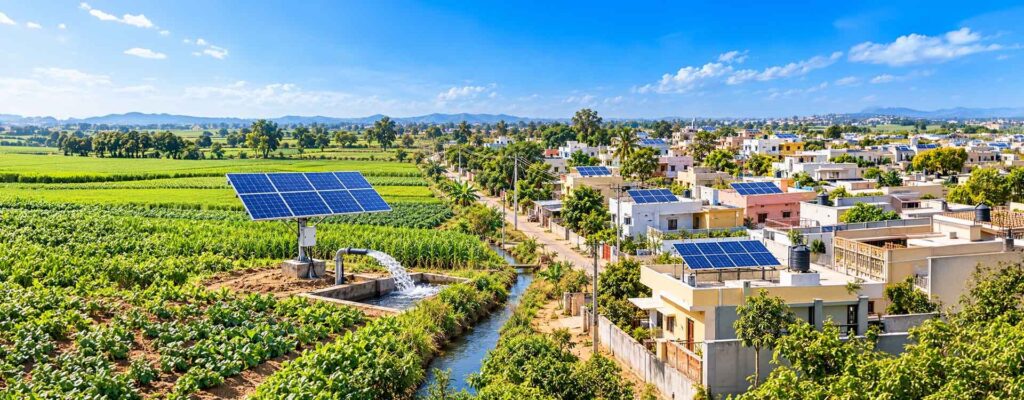
India’s solar transition is visible on rooftops and in fields as well as in large power parks. Decentralised solar places generation closer to the people who use electricity. That makes it an important part of the conversation about household budgets, irrigation, local employment and access to dependable energy.
The scale is already significant. A government backgrounder published in August 2026 reported that distributed solar contributed 16.3 GW of India’s solar capacity additions in FY 2025-26: 7.6 GW through PM-KUSUM and 8.7 GW from rooftop solar. These are additions during that financial year, rather than a measure of all decentralised solar installed to date. [1]
Feeder-Level Solarisation: A PracticalRoute to Better Farm Power
GK Energy Knowledge Centre | Prepared 8 October 2026 | 4 min read
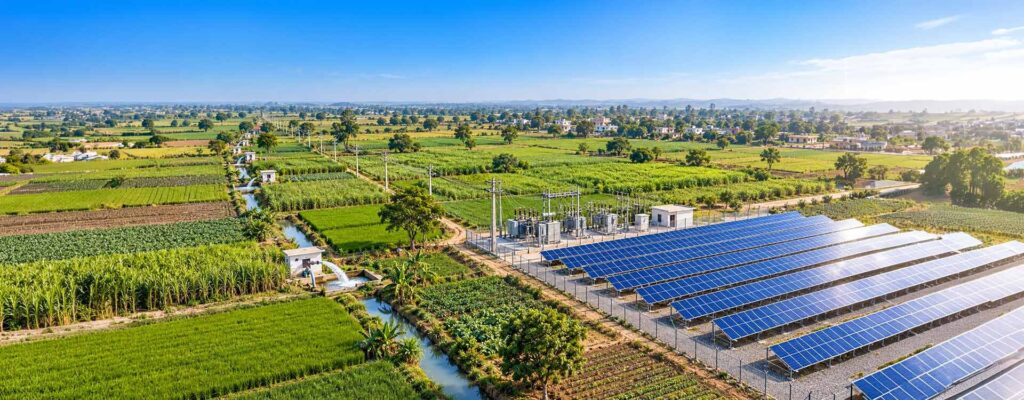
For a farmer, dependable electricity is part of the irrigation plan. When supply arrives at inconvenient hours, the cost is measured in disrupted work, uncertain watering schedules and time spent waiting. Feeder-level solarisation offers a practical way to bring solar generation closer to agricultural demand and make daytime power a more useful part of rural life.
The opportunity begins with an existing network: agricultural feeders, substations and connected pumps. By planning solar projects around this infrastructure, states can address the energy needs of multiple farms together. The investment question is therefore about how effectively a project improves electricity service across the area it serves.